
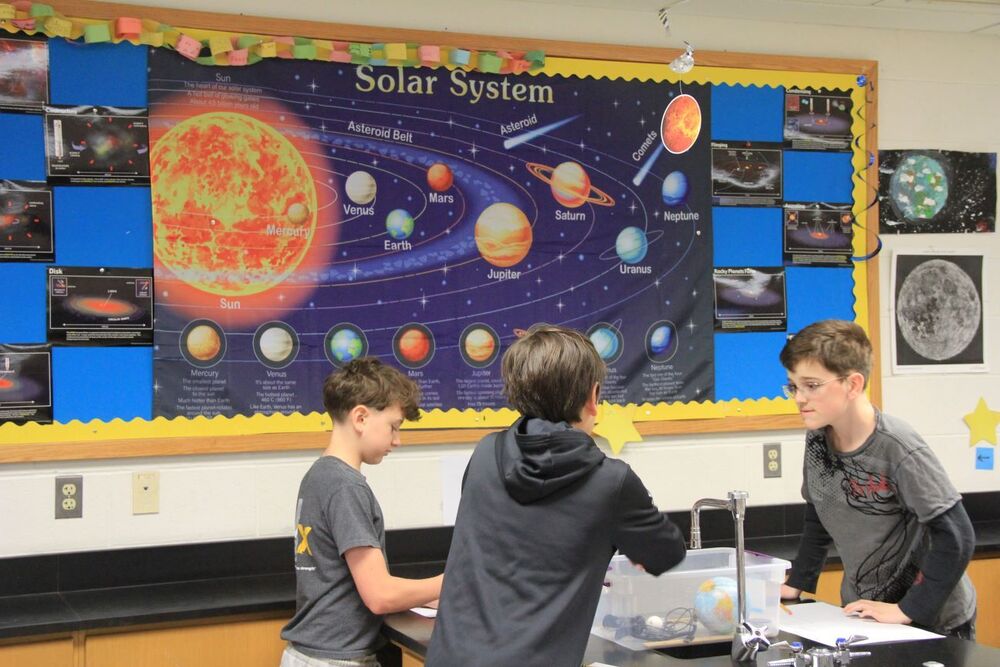
Do you know the reason for the seasons? Mrs. Bauer's sixth grade students took a hands-on approach to answering that question. We have the privilege of visiting her science class at the Sixth Grade Center and watching students uncover the answers behind Earth's seasonal changes.
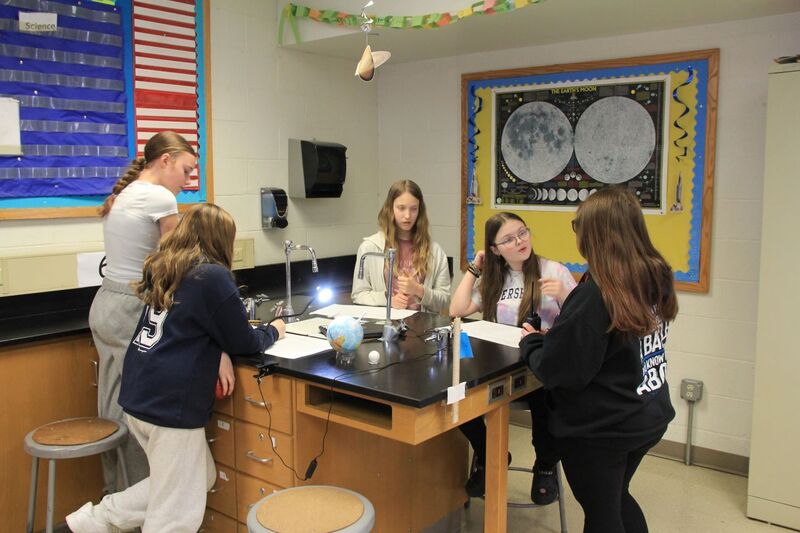
Mrs. Bauer explained that the Earth’s 23.4” axial tilt and its orbit around the Sun cause the seasons. Students were asked to recreate each season using small globes and flashlights as models. By shining their flashlights on the small globe, keeping the Earth tilted at 23.4", students observed how the sunlight spreads out or becomes more concentrated.
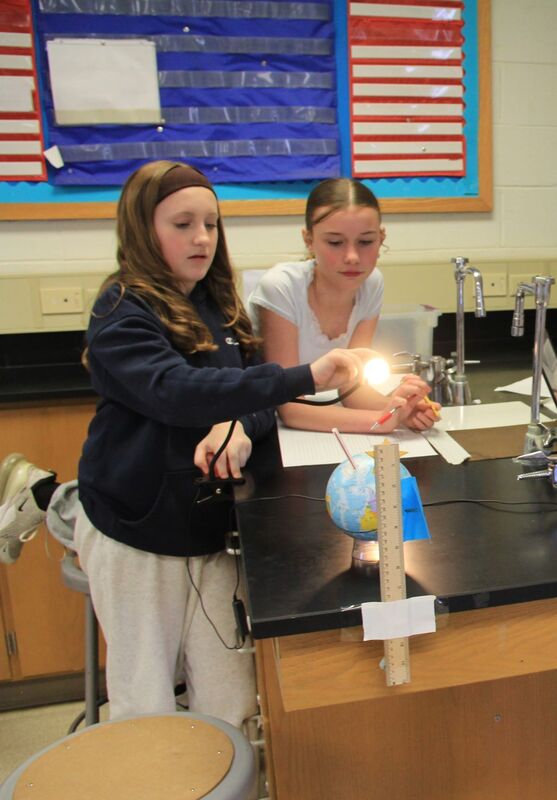
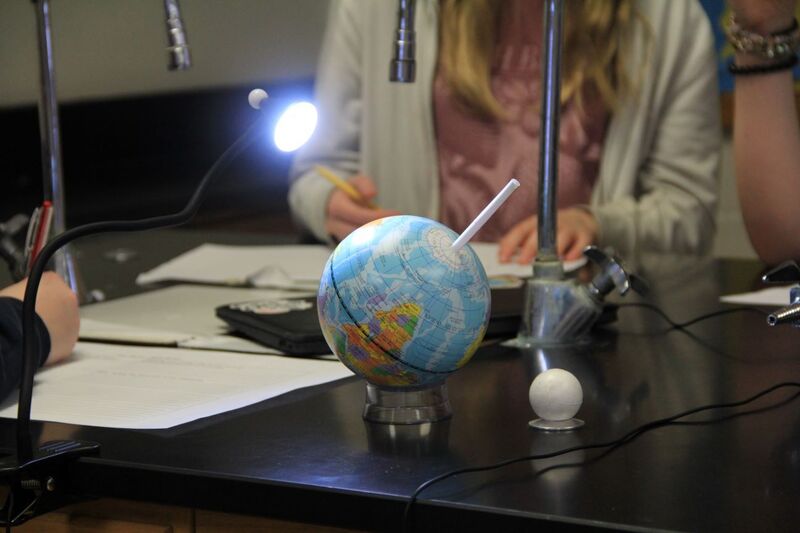
Students illustrated each season, the position of the Sun, and the position of the Earth, using the globe and flashlight models to help guide their sketches. Students were instructed to show arrows identifying the different orbit directions and axis rotations.
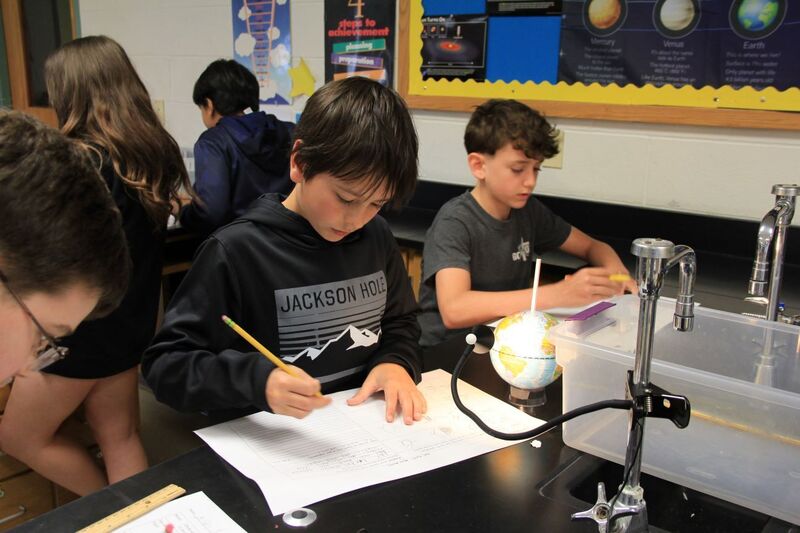
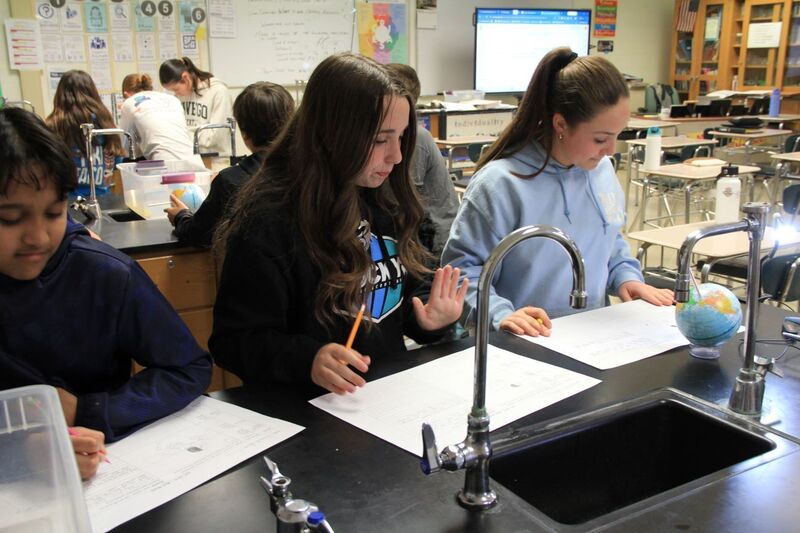
Through this activity, students learned that the Earth’s 23.4° axial tilt and its orbit around the Sun create different sunlight intensity and day length, resulting in the seasonal changes across our planet. Particularly, the tilt of our hemisphere! When it is tilted towards the Sun and receives more concentrated sunlight and longer days, that’s when we experience summer. And when the Earth is tilted away, it receives less direct sunlight and shorter days, creating winter. During spring and autumn, the earth's axis is neither tilted toward nor away from the sun, making the day and night roughly equal in length.
Students were also challenged to illustrate the Sun, Moon, and Earth’s positions during a solar eclipse and lunar eclipse.
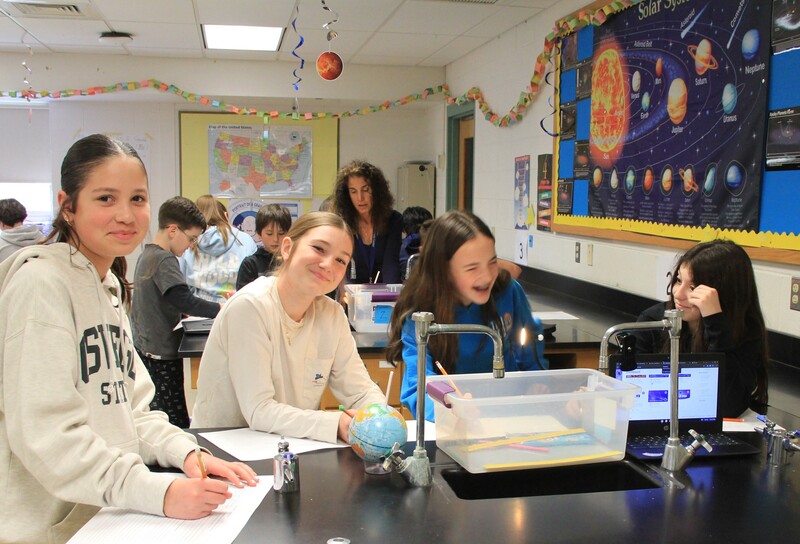
The lesson helped students understand how these astronomical factors influence daily life across our planet. While one side of the planet is in summer, the other hemisphere experiences winter, and that's why the North and South Poles experience drastic sunlight variations. This experiment helped students to see firsthand how the Earth’s position in space determines our environmental and cultural patterns across the globe.